Temperature and Color:
* Blue Stars: Extremely hot, with surface temperatures ranging from 10,000 to 50,000 Kelvin. Their intense heat causes them to emit blue light, which has a shorter wavelength than red or yellow light.
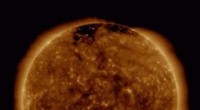
* Sun: Much cooler than blue stars, with a surface temperature of about 5,500 Kelvin. It emits mainly yellow light.
Size and Mass:
* Blue Stars: Significantly larger and more massive than our Sun. They can be several times the Sun's mass and diameter.
* Sun: A relatively small and average-sized star.
Lifetime:
* Blue Stars: Have very short lifespans, burning through their fuel much faster due to their extreme heat and luminosity. They may only last a few million years.
* Sun: Has a much longer lifespan, estimated to be about 10 billion years. It's currently about halfway through its life.
Luminosity:
* Blue Stars: Extremely luminous, radiating vast amounts of energy. They can be millions of times brighter than our Sun.
* Sun: A relatively average star in terms of luminosity.
Composition:
* Blue Stars: Primarily composed of hydrogen and helium, like the Sun, but may contain higher proportions of heavier elements.
* Sun: Also primarily composed of hydrogen and helium.
Evolution:
* Blue Stars: Eventually explode as supernovae, leaving behind either a neutron star or a black hole.
* Sun: Will expand into a red giant, eventually shedding its outer layers to become a white dwarf.
Other Differences:
* Blue stars are much rarer than the Sun because they are only formed under very specific conditions.
* Blue stars are much more energetic and have a much stronger gravitational pull.
In Summary: Blue stars are giants compared to our Sun, with higher temperatures, shorter lifespans, higher luminosity, and a much more dramatic end.