1. The Birth of the Solar System:
* The solar system began as a giant, rotating cloud of gas and dust called a solar nebula.
* This cloud had a slight, inherent rotation.
2. Conservation of Angular Momentum:
* As the nebula collapsed under its own gravity, the rotation speed increased due to the conservation of angular momentum. Imagine a figure skater pulling their arms in, spinning faster.
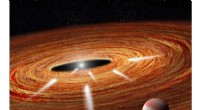
* This increased rotation flattened the nebula into a disk, much like a spinning pizza dough.
3. Planetesimal Formation:
* Within this disk, dust and gas particles collided and stuck together, forming larger clumps called planetesimals.
* These planetesimals continued to accrete material, eventually growing into the planets we see today.
4. The Plane of the Disk:
* Because the planetesimals formed within the flattened disk, their orbits naturally align with the plane of the disk, which is the ecliptic plane.
5. Gravitational Influence:
* The massive sun's gravity further influenced the orbits of the planets, keeping them confined to a relatively flat plane.
6. Exceptions and Variations:
* While most planets orbit in the same plane, there are slight variations due to gravitational interactions between planets and other celestial objects. For example, Pluto's orbit is significantly inclined compared to the other planets.
* The early solar system was chaotic, with planets occasionally shifting orbits and even colliding.
In summary, the planets in our solar system orbit in nearly the same plane because they formed within a flattened disk of gas and dust, driven by the conservation of angular momentum and influenced by the sun's gravity. While there are minor variations, the overall alignment of the orbits is a testament to the fundamental principles of physics that governed the solar system's formation.