Broad Hypotheses:
* Hypothesis: The rate of expansion of the universe is not constant but is accelerating.
* Rationale: This hypothesis is based on observations of distant supernovae and the cosmic microwave background radiation.
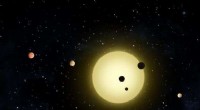
* Hypothesis: There are more planets orbiting stars outside our solar system than there are stars in the Milky Way galaxy.
* Rationale: This hypothesis is based on the increasing number of exoplanets being discovered.
* Hypothesis: The presence of supermassive black holes at the centers of galaxies plays a crucial role in the formation and evolution of galaxies.
* Rationale: There is strong evidence for supermassive black holes at galactic centers, and their gravitational influence could shape galaxy evolution.
Specific Hypotheses:
* Hypothesis: The newly discovered exoplanet Kepler-186f has a similar atmospheric composition to Earth.
* Rationale: This hypothesis could be tested by observing the exoplanet's atmospheric composition through spectroscopy.
* Hypothesis: The mysterious "fast radio bursts" (FRBs) originate from merging neutron stars.
* Rationale: This hypothesis could be tested by observing FRBs and looking for associated gravitational waves.
* Hypothesis: The dark matter halo surrounding the Milky Way galaxy is not uniformly distributed, but is clumpier than previously thought.
* Rationale: This hypothesis could be tested by studying the motion of stars and gas in the galaxy.
Key Elements of a Good Astronomical Hypothesis:
* Testable: The hypothesis should be able to be tested through observations and experiments.
* Falsifiable: It should be possible to prove the hypothesis wrong.
* Explanatory Power: The hypothesis should explain some observed phenomenon or provide a new understanding of a known phenomenon.
* Based on Existing Knowledge: The hypothesis should build upon current astronomical knowledge and understanding.
Astronomers use hypotheses to guide their research and to make predictions about the universe. They then test these predictions through observations and experiments. The results of these tests can either support or refute the hypothesis, leading to further refinements or the development of new hypotheses.