1. High-Energy Radiation:
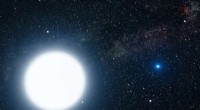
- Massive stars are very hot, with surface temperatures exceeding 25,000 Kelvin.
- This intense heat leads to the emission of large amounts of UV radiation.
2. Ionization:
- UV photons from the star carry enough energy to knock electrons out of the hydrogen atoms in the surrounding gas, creating positively charged hydrogen ions (protons) and free electrons. This process is called photoionization.
3. Emission of Light:
- Once the hydrogen atoms are ionized, the protons and electrons recombine, releasing energy in the form of light.
- This recombination light is often visible as a characteristic reddish glow, due to the strong emission line of hydrogen at 656.3 nm (the Balmer alpha line).
4. Nebula Formation:
- The ionized gas, which is now hot and luminous, forms a cloud-like structure called an ionization nebula.
In summary:
Hot, massive stars provide the powerful UV radiation needed to ionize the surrounding gas. The subsequent recombination of ionized atoms releases energy in the form of light, creating the vibrant and colorful ionization nebulae we observe.