1. Composition:
* Both are primarily composed of hydrogen and helium, although stars have a much higher proportion of hydrogen.
* They can also contain heavier elements, but in much smaller quantities.
2. Formation:
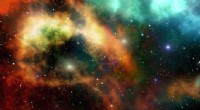
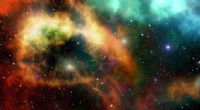
* Both stars and planets form from giant clouds of gas and dust called nebulae.
* The process of formation involves gravitational collapse and accretion, where material pulls together and accumulates.
3. Gravity:
* Both stars and planets have gravity, which is the force that holds them together and governs their interactions.
* Gravity is responsible for attracting material during formation and influences their internal structure and evolution.
4. Energy:
* Stars generate energy through nuclear fusion in their core, which releases light and heat.
* Planets don't generate their own energy, but they can absorb and reflect light from nearby stars.
5. Orbit:
* While planets orbit stars, some stars can also be part of binary or multiple star systems, where they orbit each other.
6. Atmospheric properties:
* Some planets have atmospheres, like Earth.
* Stars also have atmospheres, but they are much hotter and more dynamic.
7. Magnetic fields:
* Both stars and planets can have magnetic fields, which can influence their interactions with other celestial objects.
It's important to note that:
* Stars are much larger and hotter than planets.
* Stars are powered by nuclear fusion, while planets are not.
* Stars have a much shorter lifespan than planets.
Overall, while stars and planets have some similarities in their composition, formation, and fundamental physical properties, their nature, energy sources, and evolutionary paths are vastly different.