Here's why:
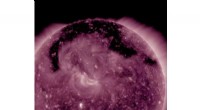
* The Sun's Layers: The sun is composed of several layers, with the photosphere being the visible "surface". Beneath the photosphere lies the convective zone, where energy is transported upwards by convection.
* Radiation Emission: The photosphere is the region where the sun's plasma becomes transparent to visible light. This means the light generated deeper within the sun can finally escape and reach Earth.
* Temperature & Emission: The photosphere has a temperature of around 5,500 degrees Celsius (9,932 degrees Fahrenheit). This temperature is ideal for emitting the maximum amount of radiation in the visible light spectrum, which is what our eyes can detect.
So, when we look at the sun, we are actually seeing the photosphere, the outermost layer that lets the light escape into space.