Gravity:
* The Earth's gravitational pull constantly pulls on the satellite, trying to bring it down.
* However, the satellite is also moving forward at a high speed.
Orbital Mechanics:
* The satellite's forward motion (its velocity) is just the right speed to counteract the pull of gravity. This creates a balance.
* If the satellite were moving too slow, gravity would pull it down to Earth.
* If it were moving too fast, it would fly off into space.
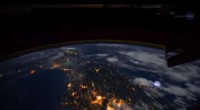
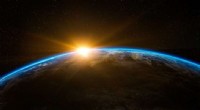
* This balance between gravity and velocity is what keeps the satellite in a stable orbit around Earth.
Types of Orbits:
Satellites can have different types of orbits, including:
* Low Earth Orbit (LEO): These orbits are closer to Earth, typically ranging from 160 to 2,000 kilometers above the surface. Many communication, Earth observation, and weather satellites are in LEO.
* Medium Earth Orbit (MEO): These orbits are higher than LEO, between 2,000 and 35,786 kilometers above the surface. Some navigation satellites like GPS are in MEO.
* Geostationary Orbit (GEO): This special orbit is located at a precise altitude of 35,786 kilometers above the equator. Satellites in GEO appear stationary relative to Earth because their orbital period is exactly one day. They are used for communication and broadcasting.
Why we launch satellites:
We launch satellites for various purposes, including:
* Communication: Satellites relay signals for television, telephone, internet, and other communication services.
* Navigation: GPS and other navigation systems use satellites to determine location.
* Earth Observation: Satellites monitor weather patterns, map the Earth's surface, and track environmental changes.
* Scientific Research: Satellites study the Earth's atmosphere, oceans, and the universe.
* Military: Satellites are used for surveillance, communication, and other military operations.
In short: Satellites travel around Earth due to the interplay of gravity and their forward motion, creating a balance that allows them to orbit the planet without falling down or flying off into space.