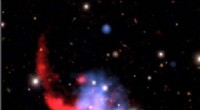
* Nebulae are vast and diffuse: They're not like planets or stars with clear boundaries. They were likely observed long before they were understood.
* Early astronomers didn't have telescopes: They likely saw bright nebulae like the Orion Nebula with the naked eye and named them "clouds" or "fog."
Here are some key milestones:
* Ancient Times: Early civilizations likely observed nebulae and incorporated them into their mythology and astronomy. For example, the Orion Nebula was likely known to ancient Egyptians and Greeks.
* 17th Century: With the invention of the telescope, astronomers like Galileo Galilei started making detailed observations of nebulae.
* 18th Century: Charles Messier catalogued many nebulae, including the Andromeda Galaxy, which was initially mistaken for a nebula.
* 19th Century: The development of spectroscopy allowed astronomers to understand the composition of nebulae and distinguish them from distant galaxies.
* 20th Century: Advancements in telescope technology and space exploration led to detailed images and studies of nebulae, revealing their complex structure and formation processes.
So, while we can't pinpoint an exact date for the "discovery" of nebulae, we can say that they have been observed and studied for centuries. Our understanding of them continues to grow with each new generation of telescopes and astronomical advancements.