* Both are planets in our solar system: This is a pretty basic one, but it's important to remember that both bodies orbit the Sun.
* Both have atmospheres: Earth's atmosphere is primarily composed of nitrogen and oxygen, while Jupiter's is mostly hydrogen and helium. Both atmospheres have clouds and weather patterns, though on a much larger scale on Jupiter.
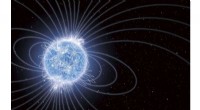
* Both have magnetic fields: These fields are generated by the movement of electrically conductive material in their interiors. While Earth's field is relatively weak, Jupiter's is the strongest in the solar system.
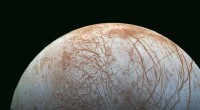
* Both have moons: Earth has one moon, while Jupiter has 79. These moons are diverse and offer a window into planetary formation and evolution.
* Both are subject to the Sun's gravitational influence: This keeps them in their orbits and affects their climates.
However, it's important to note that these similarities are dwarfed by their differences. Jupiter is a gas giant, while Earth is a terrestrial planet. Jupiter is much larger, has a much weaker gravitational pull, and has a completely different composition.
Ultimately, Earth and Jupiter are more different than alike.