1. Attraction and Collapse:
* Initial Attraction: Gravity acts as the primary force that draws the particles of gas and dust in a nebula closer together. The initial density variations within the nebula mean some regions have slightly higher densities than others. This slight difference in density causes a gravitational pull on the surrounding material, initiating the collapse.
* Gravitational Collapse: As particles gather, their gravitational pull strengthens, drawing in even more material. This positive feedback loop results in a rapid collapse of the nebula, creating a dense, rotating core.
2. Formation of Stars and Planets:
* Protostar Formation: The dense core of the collapsing nebula heats up due to the compression. If enough material accumulates, the core becomes hot and dense enough to trigger nuclear fusion, forming a protostar.
* Planetary Disk: As the protostar forms, the remaining material in the collapsing nebula forms a rotating disk around it. The disk is further influenced by gravity, causing particles to clump together and eventually form planets.
3. Shaping and Structure:
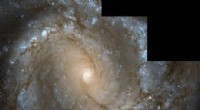
* Gravity and Density Variations: Gravity's influence is not uniform throughout the nebula. Density variations lead to different gravitational forces, shaping the nebula into various structures, like filaments, clumps, and even spiral arms.
* Magnetic Fields: While gravity is the dominant force, the interactions between the particles in the nebula and magnetic fields also play a role in shaping the nebula and directing the flow of material.
4. Effects on Particles:
* Collisions: The particles within the nebula, drawn together by gravity, collide with each other. These collisions can generate heat, leading to the formation of larger particles and even small planetesimals.
* Chemical Reactions: Gravity helps to compress the nebula, increasing the density and pressure, which facilitates chemical reactions between the particles. This can lead to the formation of complex molecules.
In summary: Gravity is the driving force behind the formation of stars and planets within a nebula. It attracts particles, causing them to collapse, heat up, and ultimately form new celestial bodies. The gravitational forces, coupled with the interactions of particles and magnetic fields, shape the nebula and its structures.