1. The Naked Eye:
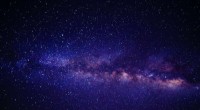
* Stars: Astronomers could distinguish thousands of stars and their relative brightness. They identified constellations and used them for navigation and timekeeping.
* Planets: They observed the five visible planets (Mercury, Venus, Mars, Jupiter, and Saturn) and tracked their movements across the sky.
* The Moon: They carefully observed lunar phases, eclipses, and other lunar phenomena.
* The Sun: They noted the Sun's position and used its movements to define solstices and equinoxes, creating calendars.
2. Instruments:
* Gnomons: These were simple vertical sticks used to measure the Sun's altitude and shadow lengths, helping determine the time of day and year.
* Astrolabes: These handheld devices helped determine latitude, time, and celestial positions.
* Armillary Spheres: These models of the celestial sphere were used for visual representation of planetary movements.
* Quadrants and Sextants: These instruments helped measure the angles of celestial objects relative to the horizon.
3. Observations and Record-keeping:
* Star Charts: Ancient astronomers created detailed charts mapping constellations and star positions.
* Ephemerides: These tables predicted the positions of celestial bodies over time.
* Observation Records: Astronomers diligently recorded their observations and made careful note of celestial events.
4. Theories and Interpretations:
* Geocentric Model: The prevailing theory before the telescope was that the Earth was the center of the universe, with the Sun, Moon, and stars revolving around it.
* Astrology: Many cultures believed in the influence of celestial bodies on human lives and events.
Limitations of Naked Eye Astronomy:
* Limited Resolution: The naked eye has limited resolution, making it difficult to see faint objects or details on celestial bodies.
* Limited Magnification: Without magnification, it was impossible to see distant objects in greater detail.
* Atmospheric Distortion: The Earth's atmosphere can distort light, blurring celestial objects and affecting observations.
The invention of the telescope in the early 17th century revolutionized astronomy, allowing astronomers to see much fainter objects, observe planetary details, and make groundbreaking discoveries.