Here's how it works:
* Initial Matter: The universe starts with a very diffuse distribution of matter, mostly hydrogen and helium.
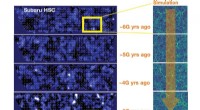
* Slight Density Fluctuations: There are tiny variations in density, with some regions having slightly more matter than others.
* Gravitational Attraction: These slightly denser regions have a stronger gravitational pull. This attracts even more matter, further increasing their density.
* Runaway Effect: As the density increases, the gravitational pull gets stronger, attracting even more matter. This creates a positive feedback loop, leading to the formation of larger and larger clouds.
* Cloud Formation: Eventually, these dense regions become large enough and have enough gravitational pull to collapse under their own weight, forming vast clouds of hydrogen and helium.
Other Factors:
While gravity is the primary force, other factors can contribute to cloud formation:
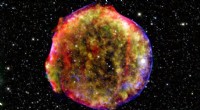
* Supernovae: Exploding stars can create shockwaves that compress existing gas, triggering cloud formation.
* Magnetic Fields: Magnetic fields can influence the movement of gas, helping to concentrate it into clouds.
These clouds of hydrogen and helium are the building blocks of stars and galaxies. They are the starting point for the entire cycle of stellar evolution.