From a Scientific Perspective:
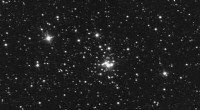
* Stars are born from the collapse of massive clouds of gas and dust called nebulae. These clouds are primarily composed of hydrogen and helium, the most abundant elements in the universe. Gravity pulls these clouds together, causing them to heat up and eventually ignite nuclear fusion in their cores. This process releases immense energy, giving birth to a star.
* Star formation is a natural consequence of the laws of physics. The universe began in a hot, dense state and has been expanding and cooling ever since. This expansion and cooling led to the formation of galaxies, nebulae, and eventually stars.
* Stars play a crucial role in the cosmic cycle. They produce heavier elements through nuclear fusion, which are then dispersed into the universe through stellar winds and supernova explosions. These elements are essential for the formation of planets, including our own.
From a Philosophical Perspective:
* The question of "why" is inherently subjective. Different cultures and belief systems have different answers to this question, often rooted in their mythology and cosmology.
* Some see stars as a manifestation of a cosmic order or design. This perspective often ties star formation to a higher power or a purpose beyond human understanding.
* Others focus on the awe and beauty inspired by stars. The vastness of the universe and the grandeur of stars can evoke a sense of wonder and inspire philosophical reflection on our place in the cosmos.
It's important to note:
* There is no definitive scientific answer to the question of "why" stars were created. Science focuses on the "how" and the "what," not the "why."
* The meaning and purpose of stars is ultimately a matter of personal belief and interpretation. There is no right or wrong answer.
Ultimately, the question of why stars were created is a journey of exploration, both scientific and philosophical. By studying the universe and considering different perspectives, we can gain a deeper understanding of our place within the cosmos.