Here's why:
* The solar nebula hypothesis proposes that our solar system formed from a giant cloud of gas and dust called a nebula. This cloud collapsed under its own gravity, and as it did, it spun faster and flattened into a disk.
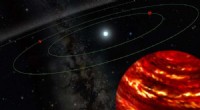
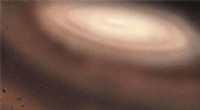
* Protoplanetary disks are precisely these rotating disks of gas and dust that are observed around young stars. These disks are thought to be the building blocks of planetary systems, just like the solar nebula is thought to be the building block of our own solar system.
* The presence of protoplanetary disks around other stars supports the idea that the process of forming planetary systems is not unique to our own solar system. It suggests that the solar nebula hypothesis, which describes how our solar system formed, is likely a general mechanism for planetary system formation.
Additional evidence:
* Composition of protoplanetary disks: The composition of these disks, including elements like hydrogen, helium, and heavier elements, matches the composition of the Sun and the planets in our solar system, further supporting the idea of a common origin.
* Formation of planets: The observation of young planets forming within these disks, along with the detection of gaps and rings within the disks, provides further evidence for the validity of the solar nebula hypothesis.
The existence of protoplanetary disks around other stars is a powerful observational confirmation of the solar nebula hypothesis, strengthening our understanding of how planetary systems form.