* Gas: The most common gases in nebulae are hydrogen and helium, making up the vast majority of their composition.
* Dust: This dust is made up of tiny particles of heavier elements, like carbon, oxygen, and silicon.
* Stars: Nebulae are often regions of star formation. While not all nebulae contain stars, many are the birthplaces of new stars.
* Young stellar objects (YSOs): These are stars in the early stages of their development, still gathering mass.
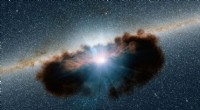
* Planetary systems: Some nebulae might contain developing planetary systems around young stars.
* Magnetic fields: Nebulae often have complex magnetic fields, which influence the formation of stars and their surrounding disks.
* Radiation: Nebulae are often illuminated by nearby stars, creating spectacular colors and patterns.
* Shock waves: These are created by powerful events like supernova explosions, which can compress gas and trigger star formation.
What you're unlikely to find in a nebula:
* Planets: While planetary systems can form within nebulae, fully-formed planets are unlikely to be found within the dense, chaotic environment.
In short, nebulae are diverse and dynamic regions of space that contain the raw materials for star and planet formation. They are fascinating places to study and a testament to the ongoing evolution of the universe.