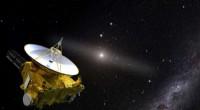
While we don't typically think of a solar system as having a specific "function" in the same way a machine does, we can think about its role in the universe:
1. Creating and Sustaining Life:
* Stars like our Sun provide light and heat. This energy is crucial for life to exist on planets.
* Planets can be habitable. Earth's ideal distance from the Sun, its atmosphere, and its water are all products of its place within our solar system.
* Moons can provide gravitational stability. For example, our Moon stabilizes Earth's tilt, which moderates our climate.
2. Contributing to the Universe's Evolution:
* Stars create heavier elements. Through nuclear fusion, stars create elements heavier than hydrogen and helium, which are then scattered throughout the universe when they die. This material forms new stars, planets, and galaxies.
* Solar systems can interact with each other. Gravity and other forces can cause interactions between solar systems, potentially leading to the formation of new objects or the destruction of existing ones.
3. A Place for Exploration and Discovery:
* Our solar system offers a fascinating laboratory for studying the universe. By observing our own system, we learn about the formation of planets, stars, and galaxies, giving us insight into the vastness of space.
So, while a solar system doesn't have a single, specific function, it plays a vital role in the universe's evolution, the creation and potential sustenance of life, and provides endless opportunities for scientific exploration and discovery.