1. Measuring Angular Diameter:
* This method is used for relatively nearby objects like planets, moons, and some stars.
* Scientists measure the object's apparent size (angular diameter) in the sky using telescopes and other instruments.
* Knowing the object's distance (which can be determined through various techniques like parallax), they use trigonometry to calculate its actual size.
2. Using Parallax:
* This method utilizes the apparent shift in an object's position against distant background stars as the Earth orbits the sun.
* By measuring the angle of this shift, scientists can calculate the object's distance using trigonometry.
* With the distance known, they can estimate the object's size based on its apparent brightness.
3. Measuring Luminosity and Temperature:
* This method applies to stars and other celestial bodies that emit their own light.
* Scientists determine the object's luminosity (intrinsic brightness) and surface temperature by analyzing its emitted light spectrum.
* Using theoretical models of stellar evolution and radiation, they can estimate the object's size based on its luminosity and temperature.
4. Measuring Orbital Period and Velocity:
* This method applies to binary star systems and planets orbiting stars.
* By observing the orbital period and velocity of the objects, scientists can calculate their masses using Kepler's laws of planetary motion.
* Knowing the mass and density of the object (which can be estimated based on its composition), scientists can estimate its size.
5. Using Interferometry:
* This technique combines the light collected by multiple telescopes to create a virtual telescope with a larger aperture.
* The increased resolution allows scientists to observe finer details, including the angular diameter of distant objects like stars and galaxies.
6. Analyzing Light Curves:
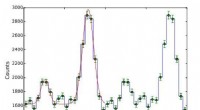
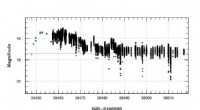
* This method involves studying the variations in an object's brightness over time.
* By analyzing the patterns in the light curve, scientists can identify various properties like the size, shape, and rotation of the object.
7. Studying Eclipses:
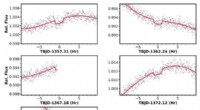
* When a star or planet passes in front of another celestial body, it creates an eclipse.
* By analyzing the duration and intensity of the eclipse, scientists can estimate the relative sizes of the objects involved.
8. Using Radar:
* This method involves sending radar signals to a celestial object and analyzing the reflected signals.
* The time it takes for the signals to travel to the object and back provides information about its distance.
* The reflected signals can also provide information about the object's surface characteristics, which can be used to estimate its size.
These are just some of the techniques used by scientists to determine the sizes of objects in space. The specific method employed depends on the object's characteristics and the available technology. As technology advances, scientists will continue to develop new and more precise techniques for measuring the sizes of objects in the vast expanse of space.