Here's a breakdown:
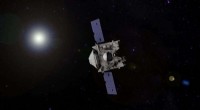
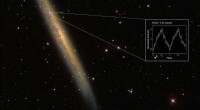
* Kepler Mission: The Kepler Space Telescope, launched in 2009, found thousands of exoplanets, including many Earth-sized and smaller planets. Some of these, like Kepler-186f, are in the habitable zone of their stars.
* Other Missions: Other space telescopes and ground-based observatories have continued the search, detecting more Earth-sized planets.
* TESS Mission: The Transiting Exoplanet Survey Satellite (TESS), launched in 2018, is specifically designed to find planets orbiting nearby stars. It has already discovered numerous Earth-sized planets.
Important Note: While we have detected many Earth-sized planets, it's important to remember:
* We don't know if they are truly Earth-like: We only know their size and orbital distance, not their composition or atmosphere.
* Habitable Zone doesn't guarantee life: Being in the habitable zone doesn't automatically mean a planet is habitable. Other factors, like atmosphere and internal heat, play a role.
Despite these limitations, the discovery of so many Earth-sized planets is a major breakthrough in our understanding of exoplanets and the possibility of life beyond Earth.