* All moons exist in space: Moons are natural satellites that orbit planets. They are out there, regardless of whether we can see them.
* Telescopes help us see fainter objects: Telescopes gather more light than our eyes can, making it possible to see fainter objects in the sky, including some moons that are too dim to see with the naked eye.
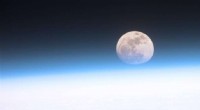
* Not all moons are interesting: Some moons are tiny and barely visible even with a telescope. Others are large and bright enough to be seen with the naked eye, like our own Moon.
* Distance matters: The closer a moon is to its planet, the easier it will be to see with a telescope. Moons of distant planets are often too faint to be observed even with powerful telescopes.
Here are some examples:
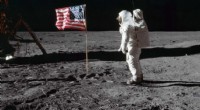
* Our own Moon: You can see the Moon's surface features in great detail through a telescope.
* Jupiter's moons: Galileo Galilei first observed Jupiter's four largest moons (Io, Europa, Ganymede, and Callisto) with a telescope. These are easy to see through even a small telescope.
* Saturn's moons: Many of Saturn's moons are visible through a telescope, including Titan, the largest moon in the solar system.
* Uranus and Neptune's moons: These moons are much fainter and more difficult to see, requiring larger telescopes.
In summary:
While all moons exist in space, a telescope is only necessary to see the fainter ones or observe more detail on the brighter ones.