Key Components:
* Star: The central and most massive object, a luminous ball of hot plasma that produces light and heat through nuclear fusion. In our solar system, this is the Sun.
* Planets: Large, spherical objects that orbit the star. They do not emit their own light but reflect the star's light. Our solar system has eight planets: Mercury, Venus, Earth, Mars, Jupiter, Saturn, Uranus, and Neptune.
* Moons (Natural Satellites): Objects that orbit planets. Our Moon is Earth's natural satellite. Many planets have multiple moons.
* Asteroids: Rocky, irregularly shaped objects, most of which are found in the asteroid belt between Mars and Jupiter.
* Comets: Icy bodies that orbit the star in highly elliptical paths. When they approach the star, they heat up and release gas and dust, creating a visible tail.
* Dust and Gas: Interstellar material that exists within the solar system.
Formation:
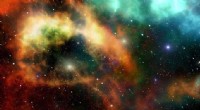
Solar systems are thought to form from collapsing clouds of gas and dust called nebulas. As the nebula collapses, it spins faster and forms a disk. The center of the disk eventually becomes hot and dense enough to ignite nuclear fusion, forming the star. The remaining material in the disk coalesces to form planets, moons, and other objects.
Key Features:
* Gravity: The force of attraction between all objects with mass is the primary force that holds a solar system together.
* Planetary Orbits: Planets and other objects orbit the star in elliptical paths, due to the star's gravitational pull.
* Orbital Zones: Different regions within the solar system are characterized by specific temperatures and composition, influencing the type of objects that exist there.
* Diversity: There is great diversity among solar systems, with varying sizes, numbers of planets, and orbital arrangements.
Studying Solar Systems:
Scientists study solar systems to understand the formation and evolution of planetary systems, the conditions necessary for life, and the possibility of other habitable worlds. Telescopes, spacecraft, and simulations are used to observe and study distant solar systems.