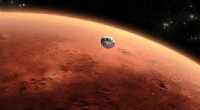
Mars, the fourth planet from the Sun, is a fascinating and enigmatic world. Here's a glimpse into what it's like:
Appearance:
* Reddish-brown color: Due to iron oxide (rust) on its surface.
* Thin atmosphere: Primarily composed of carbon dioxide, with trace amounts of nitrogen and argon.
* Two small moons: Phobos and Deimos, likely captured asteroids.
* Polar ice caps: Made of frozen water and carbon dioxide.
Environment:
* Cold and dry: Average temperature is -62°C (-80°F), with extreme variations.
* Low gravity: About 38% of Earth's gravity.
* Weak magnetic field: Unlike Earth, Mars has only a patchy magnetic field, making it vulnerable to solar radiation.
* Dust storms: Can engulf the entire planet for months, driven by strong winds.
Features:
* Olympus Mons: The largest volcano in the solar system, reaching over 21km (13 miles) high.
* Valles Marineris: An enormous canyon system, stretching over 4,000km (2,500 miles) long.
* Evidence of past water: Dried riverbeds, deltas, and mineral deposits suggest that liquid water once flowed on Mars.
* Potential for life: Some scientists believe that microbial life may have existed on Mars in the past, and there's potential for it to exist in underground environments.
Exploration:
* Multiple robotic missions: NASA, ESA, and other space agencies have sent probes to Mars, including rovers like Curiosity and Perseverance.
* Future human exploration: NASA and other organizations are working towards sending humans to Mars in the coming decades.
What makes Mars interesting:
* Potential for past and present life: The search for signs of past or present life on Mars is a driving force behind exploration.
* Understanding Earth: Studying Mars helps us understand the evolution of planets and the conditions necessary for life.
* Future human colonization: Mars is considered a prime candidate for human colonization in the future, with potential for sustainable settlements.
In a nutshell, Mars is a harsh but fascinating world with a rich history, offering clues to the origins of life and potential for future human exploration.