* Sun's Life Cycle: Our Sun is currently a main-sequence star, fusing hydrogen into helium in its core. This process generates the energy that makes it shine.
* Red Giant Phase: As the Sun runs out of hydrogen fuel, its core contracts and heats up. This causes the outer layers to expand, transforming it into a red giant.
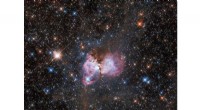
* Planetary Nebula: The red giant's outer layers eventually shed, creating a beautiful nebula. The core, now mostly composed of carbon and oxygen, continues to contract.
* White Dwarf Formation: The core contracts to a very small, dense object called a white dwarf. This object is about the size of the Earth but contains roughly the same mass as the Sun.
* Cooling and Fading: A white dwarf no longer generates energy through fusion and slowly cools over billions of years. Eventually, it will fade into a black dwarf – a theoretical object that has cooled completely, but these are thought to take longer than the current age of the universe to form.
Important Note: Only stars with a mass up to about 8 times that of our Sun will become white dwarfs. More massive stars undergo a different evolutionary path, eventually exploding as supernovas and leaving behind either neutron stars or black holes.