1. The Age and Expansion of the Universe:
* Hubble's Law: Hubble's observations of distant galaxies confirmed the expansion of the universe and established the relationship between a galaxy's distance and its redshift (a measure of how much its light has been stretched). This led to the development of the Hubble Constant, a key parameter for determining the age and size of the universe.
* Precise Age of the Universe: Hubble's observations of Cepheid variable stars, which pulsate at a predictable rate, helped refine the age of the universe to 13.8 billion years.
* Accelerating Expansion: Observations of Type Ia supernovae, which are standard candles used to measure distances, revealed that the universe's expansion is accelerating, driven by a mysterious force called dark energy.
2. The Formation and Evolution of Galaxies:
* Early Galaxies: Hubble has captured images of galaxies in their early stages of formation, showing them as smaller, chaotic objects.
* Galaxy Mergers: Hubble has observed mergers of galaxies, which contribute to their growth and evolution.
* Spiral Structure: Detailed images of spiral galaxies have helped astronomers understand the intricate dynamics of their arms and the role of gas and dust in star formation.
3. Star Birth, Life, and Death:
* Star Formation: Hubble's observations of nebulae, vast clouds of gas and dust where stars are born, have provided detailed insights into the process of star formation.
* Protoplanetary Disks: Hubble has observed disks of gas and dust around young stars, where planets are thought to form.
* Supernovae: Hubble has captured spectacular images of supernovae, the explosive deaths of massive stars, providing insights into the distribution of heavy elements in the universe.
4. The Solar System:
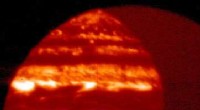
* Planets: Hubble has observed the atmospheres of planets in our solar system, providing insights into their composition and evolution.
* Moons: Hubble has captured detailed images of the surfaces of moons, revealing geological features and potential signs of past water activity.
* Comets: Hubble has observed comets as they approach the Sun, providing insights into their composition and the role they played in delivering water to Earth.
5. Exoplanets:
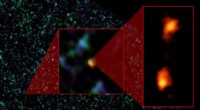
* Direct Imaging: While not its primary purpose, Hubble has helped detect a few exoplanets directly, capturing images of their faint light against the glare of their host stars.
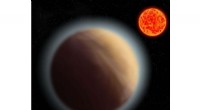
* Atmospheres: Hubble has studied the atmospheres of exoplanets, revealing their composition, temperature, and other properties.
Beyond these highlights, Hubble has contributed to numerous other fields, including:
* Cosmology: Studying the distribution of matter and energy in the universe.
* Black Holes: Observing black holes and their effects on surrounding matter.
* Dark Matter: Studying the mysterious substance that makes up the majority of the universe's mass.
Hubble's legacy is immense. Its groundbreaking discoveries have transformed our understanding of the universe, and its observations continue to inspire generations of astronomers.