Flyby Missions:
* Pioneer 10 & 11: These were the first spacecraft to fly past Jupiter, providing close-up images and data about the planet's atmosphere, magnetic field, and moons.
* Voyager 1 & 2: These spacecraft conducted more detailed flybys of Jupiter, capturing stunning images of the Great Red Spot and other atmospheric features.
* Ulysses: This spacecraft flew by Jupiter to use the planet's gravity to slingshot itself towards the Sun's poles.
* New Horizons: This spacecraft flew by Jupiter on its way to Pluto, using the encounter to test its instruments and gather data about the planet's atmosphere and magnetosphere.
Orbital Missions:
* Galileo: This spacecraft orbited Jupiter for eight years, providing the first close-up images of the planet's moons and capturing data about its atmosphere, magnetic field, and volcanic activity.
* Juno: This spacecraft is currently orbiting Jupiter, studying its atmosphere, gravity field, and magnetic field.
Future Missions:
* Europa Clipper: This mission is planned to launch in the 2020s and will orbit Jupiter's moon Europa, studying its potential for habitability.
* JUICE (Jupiter Icy Moons Explorer): This mission is planned to launch in 2022 and will orbit Jupiter and its three large moons (Ganymede, Callisto, and Europa), studying their composition, geology, and potential for life.
Key Features for Reaching Jupiter:
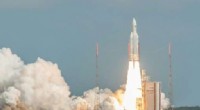
* Powerful rockets: Reaching Jupiter requires a high launch velocity to escape Earth's gravity.
* Gravity assist maneuvers: Spacecraft can use the gravity of other planets to increase their speed and change direction.
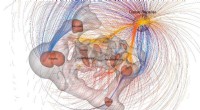
* Radiation shielding: Jupiter has a strong magnetic field that traps high-energy radiation, so spacecraft need to be protected.
* Advanced instruments: To study Jupiter, spacecraft need to carry sophisticated instruments to gather data about its atmosphere, magnetic field, and moons.
Conclusion:
While reaching Jupiter is a challenging feat, several types of spacecraft have successfully completed this journey, providing us with valuable insights into the giant planet and its fascinating system. Future missions are planned to continue exploring this region of the solar system, potentially revealing even more about its mysteries.