* Stars have different luminosities: Stars come in a vast range of sizes, temperatures, and luminosities. Some are much smaller and cooler than our sun, while others are far larger and hotter.
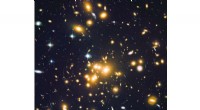
* Our view is limited: We can only observe stars within a certain distance from Earth. Our observable universe is constantly expanding, and we're constantly discovering new, distant stars.
* We can't directly compare brightness: Even if we could observe all stars, comparing brightness is tricky. The apparent brightness we see depends on the star's distance from Earth. A faint star close to us might appear brighter than a very luminous star far away.
Instead of a percentage, consider these facts:
* Our sun is a relatively average star: It's not exceptionally bright or dim compared to many other stars.
* There are many stars much brighter than our sun: Supergiants and blue giants are significantly more luminous.
* There are many stars much fainter than our sun: Red dwarfs are much smaller and cooler, and therefore much less luminous.
To put it simply: There are countless stars in the universe, and our sun is just one among them. It's not possible to determine a simple percentage of stars brighter than our sun because of the vastness and diversity of the universe.