* Earth's Rotation: The Earth's rotation on its axis makes the constellations appear to move across the sky from east to west.
* Earth's Orbit: As the Earth orbits the sun, our perspective changes, so the constellations we see at different times of the year are also different.
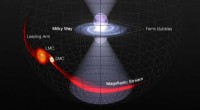
* 3D to 2D Projection: We are looking at the stars from within the Milky Way galaxy, a flat disk of stars. Our perspective flattens the 3D structure of the galaxy into a 2D image, making the constellations appear as if they are connected in patterns.
The "arrangement" of constellations is not physically real. The stars within a constellation are often vastly different distances from each other and are not gravitationally bound. They just happen to appear close together from our vantage point on Earth.
Here's a helpful analogy: Imagine you're looking at a forest from afar. The trees appear to form patterns and shapes, but in reality, they are all separate entities. The same is true with constellations – the stars are just very distant "trees" in the vast cosmic forest.
The Importance of Constellations: While they are not physically connected, constellations have been used by humans for millennia for navigation, timekeeping, and storytelling. They are also a useful tool for astronomers to identify and study specific regions of the sky.