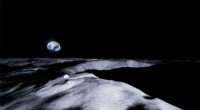
Why does it appear larger near the horizon?
While the Moon's actual angular size doesn't change, it *appears* larger near the horizon due to a phenomenon called atmospheric refraction. Here's a breakdown:
* Light bending: When light passes through the Earth's atmosphere, it gets bent, or refracted. The amount of bending depends on the density of the air, which is denser at lower altitudes.
* Moon's light bending: As the Moon's light travels through the denser air near the horizon, it bends more than when it's high in the sky. This bending makes the Moon appear slightly elongated and closer to the observer.
* Brain's perception: The brain also plays a role. When the Moon is near the horizon, we often compare its size to objects on the ground, making it appear larger.
In reality: The Moon's angular diameter remains constant. The illusion of a larger Moon near the horizon is a combination of optical and psychological effects.