The instrument that can view heavenly bodies clearly and without the filtering effect of Earth's atmosphere is a space telescope.
Here's why:
* Earth's Atmosphere is a Problem: Our atmosphere is a great shield for life on Earth, but it blocks or distorts much of the light from space. Things like:
* Light Pollution: Artificial lights from cities make it hard to see faint objects.
* Clouds and Weather: Obvious obstacles!
* Atmospheric Distortion: Our air constantly moves and shifts, causing twinkling and blurry images.
* Absorption: Certain wavelengths of light (like infrared) are absorbed by the atmosphere, preventing us from seeing them.
* Space Telescopes Offer Solutions: Telescopes launched into space avoid all these problems. They can:
* See in All Wavelengths: Study light we can't see from Earth (like X-rays or infrared).
* Get Sharper Images: No atmospheric distortion means clearer photos and observations.
* Observe 24/7: No clouds, night, or weather to block their view.
Some Famous Space Telescopes:
* Hubble Space Telescope: Iconic images of nebulae, galaxies, and planets.
* James Webb Space Telescope: The largest and most powerful space telescope ever built, studying the early universe and exoplanets.
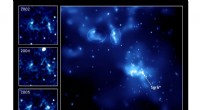
* Chandra X-ray Observatory: Detects X-rays from black holes, supernovas, and other energetic objects.
* Spitzer Space Telescope: Observed in infrared light, revealing hidden details of stars and galaxies.
Let me know if you'd like to explore any of these space telescopes in more detail!