* Low Gravity: The Moon's gravity is much weaker than Earth's. This means it can't hold onto gases very well. Any gases that might have been present early on would have easily escaped into space.
* No Magnetic Field: The Moon lacks a significant magnetic field, which helps protect planets from solar wind. Solar wind is a stream of charged particles from the Sun that can strip away an atmosphere.
* Small Size: The Moon is relatively small compared to Earth. Smaller objects have less gravity and a weaker gravitational pull on their atmosphere.
* Volcanic Activity: While the Moon was geologically active in the past, it doesn't have active volcanoes anymore. Volcanic activity can release gases into an atmosphere, but this process has ceased on the Moon.
What the Moon *does* have:
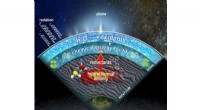
The Moon does have a very thin layer of gases called an exosphere. This exosphere is composed of trace amounts of elements like sodium, potassium, helium, and argon. These gases come from:
* Solar Wind: The solar wind brings in some of these elements.
* Micrometeoroids: Tiny space rocks hitting the surface can release gases.
* Outgassing: There's evidence that some gases might be released from the Moon's interior, though this is a very small amount.
While the Moon's exosphere is technically an atmosphere, it's so thin that it doesn't provide any protection from radiation or meteoroids. It's essentially a vacuum.