Four inner, rocky planets and four outer, gas giants:
* Inner planets (terrestrial): Mercury, Venus, Earth, and Mars. These planets are relatively small, dense, and composed primarily of rock and metal.
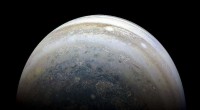
* Outer planets (gas giants): Jupiter, Saturn, Uranus, and Neptune. These planets are massive, have low density, and are composed primarily of hydrogen and helium.
They orbit the Sun in a relatively flat plane:
* The planets all follow elliptical orbits around the Sun, but these orbits are very close to a flat disk.
They have diverse atmospheres and moons:
* Each planet has a unique atmosphere, ranging from thin and almost nonexistent (Mercury) to thick and dense (Venus).
* Many planets have a system of natural satellites, called moons, which vary greatly in size and composition.
They are constantly evolving:
* The planets are not static objects but are constantly changing due to geological activity, atmospheric processes, and interactions with the Sun and other bodies in the solar system.
In summary, the eight planets of our solar system are a diverse and fascinating group of celestial objects, each with its own unique characteristics and history.