* Stars:
* Individual objects: Stars are giant balls of hot, glowing gas, primarily hydrogen and helium. They produce their own light and heat through nuclear fusion.
* Countless in number: The universe is filled with billions upon billions of stars.
* Vary in size and age: Stars come in different sizes, colors, and temperatures, and they have life cycles that can span billions of years.
* Milky Way:
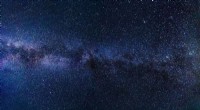
* Galaxy: The Milky Way is a vast, spiral-shaped collection of billions of stars, gas, dust, and dark matter.
* Our home galaxy: Our solar system, including the Sun and Earth, is located within the Milky Way.
* Massive and complex: The Milky Way is incredibly large, spanning over 100,000 light-years in diameter. It's a complex system with spiral arms, a central bulge, and a supermassive black hole at its core.
In short:
* Stars are the individual building blocks of galaxies.
* The Milky Way is a galaxy that contains countless stars, including our Sun.
Think of it like this: Imagine a forest. The trees are like stars, and the forest itself is like the Milky Way galaxy.