Here's a breakdown of what they might focus on:
Origin of Life:
* How did life first arise on Earth?
* Could life have arisen elsewhere in the universe?
* What are the necessary conditions for life to exist?
Evolution of Life:
* How has life on Earth evolved over time?
* What are the key milestones in the evolution of life?
* How can we use evolutionary principles to understand life elsewhere?
Distribution of Life:
* What are the possibilities of finding life on other planets or moons?
* How can we detect life on other planets?
* What are the potential challenges of detecting life on other planets?
Future of Life:
* How might life evolve in the future on Earth?
* What are the potential impacts of climate change on life on Earth?
* How can we protect life on Earth and potentially on other planets?
Specific Research Areas:
Astrobiologists might research:
* Extremophiles: Organisms that can survive in extreme environments on Earth, such as hot springs, deep-sea vents, and even inside rocks. This helps them understand the potential for life in extreme environments on other planets.
* Biosignatures: Indicators of past or present life, such as fossils, organic molecules, and even the composition of planetary atmospheres.
* Habitability: The conditions that are necessary for life to exist, including the presence of liquid water, a suitable temperature range, and a source of energy.
* Space Exploration: The development of instruments and techniques for searching for life on other planets and moons.
Tools and Methods:
Astrobiologists use a variety of tools and methods in their research, including:
* Microscopes: To study the structure of cells and organisms.
* Spectrometers: To analyze the chemical composition of samples.
* Telescopes: To observe distant planets and moons.
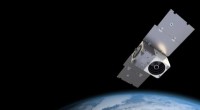
* Spacecraft: To collect data from other planets and moons.
* Computer modeling: To simulate the evolution of life and the habitability of planets.
Astrobiology is a rapidly growing field with exciting possibilities for the future. As we continue to explore the universe, astrobiologists will play a key role in answering some of the biggest questions about life and the universe.