* Low Gravity: The Moon's gravity is much weaker than Earth's. This means it doesn't have enough gravitational pull to hold onto a significant amount of gas. Any gas molecules present will easily escape into space.
* Lack of Magnetic Field: The Moon lacks a substantial magnetic field, unlike Earth. This magnetic field helps to protect our atmosphere from the solar wind, a stream of charged particles from the Sun. Without a magnetic field, the solar wind can easily strip away any atmosphere the Moon might have.
* No Geological Activity: Unlike Earth, the Moon has very little geological activity. This means there's no volcanic activity or other processes that release gases into the atmosphere.
* Small Size: The Moon is much smaller than Earth. This means it has a smaller surface area, which reduces the amount of gas it can hold.
What's in the Moon's Exosphere:
While the Moon's exosphere is very thin, it does contain some gases, mainly:
* Sodium: This gas is believed to come from the lunar surface, where it is released by the solar wind.
* Potassium: Similar to sodium, it originates from the lunar surface.
* Helium: This gas is released from the solar wind.
* Argon: Released from the lunar surface.
* Neon: Released from the lunar surface.
It's important to note:
* The Moon's exosphere is so thin that it's practically a vacuum compared to Earth's atmosphere.
* The density of the Moon's exosphere varies significantly depending on the time of day and the strength of the solar wind.
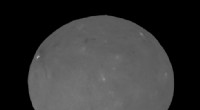
In short, the Moon's lack of a substantial atmosphere is a result of its low gravity, lack of a magnetic field, limited geological activity, and small size.