1. Expanding the Visible Universe:
* Early telescopes: Galileo's early telescopes revealed the Moon's craters, Jupiter's moons, and the phases of Venus, shattering the geocentric model and proving that Earth wasn't the center of the universe.
* Larger, more powerful telescopes: Modern telescopes, like the Hubble Space Telescope, have pushed the boundaries of observation, allowing us to see galaxies billions of light-years away, observe the birth and death of stars, and study the formation of planetary systems.
2. Unveiling the Nature of Celestial Objects:
* Spectroscopy: Telescopes equipped with spectrographs allow us to analyze the light from celestial objects, revealing their composition, temperature, and motion. This has been crucial for understanding the makeup of stars, planets, and nebulae.
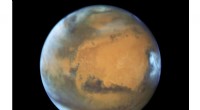
* Imaging: Telescopes capture detailed images of distant objects, providing invaluable data for studying the surface features of planets, the structure of galaxies, and the distribution of matter in the universe.
3. Discovering New Phenomena:
* Black holes: Telescopes have allowed us to indirectly observe black holes, confirming their existence and revealing their role in the evolution of galaxies.
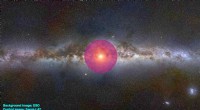
* Dark matter and dark energy: Studying the distribution and movement of galaxies has led to the discovery of dark matter and dark energy, mysterious components that make up a significant portion of the universe but are invisible to our current telescopes.
4. Fostering Scientific Advancements:
* Technological breakthroughs: The development of telescopes has driven innovation in optics, electronics, and computer science, leading to advancements in various fields.
* International collaboration: Telescopic observations often involve international collaborations, fostering scientific exchange and promoting global understanding of the cosmos.
5. Inspiring Wonder and Curiosity:
* Awe-inspiring imagery: Stunning images captured by telescopes have sparked public interest in astronomy and encouraged a deeper appreciation for the vastness and beauty of the universe.
* Fueling exploration: Telescopic discoveries have fueled our desire to explore space, leading to missions like the Apollo program, the Hubble Space Telescope, and the James Webb Space Telescope.
In conclusion, telescopes have been fundamental tools in expanding our understanding of the universe. They have unveiled the true scale and complexity of the cosmos, inspired scientific advancements, and fueled our fascination with the unknown. As technology continues to advance, we can expect even more groundbreaking discoveries from future telescopes, further deepening our understanding of the universe and our place within it.