1. Coordinate Systems:
* Right Ascension (RA) and Declination (Dec): This system is analogous to longitude and latitude on Earth.
* Right Ascension (RA): Measured in hours, minutes, and seconds, it represents the angular distance of an object east of the vernal equinox (a point in the sky where the Sun crosses the celestial equator on the spring equinox).
* Declination (Dec): Measured in degrees, minutes, and seconds, it represents the angular distance of an object north or south of the celestial equator.
* Equatorial Coordinate System: The most common system used for plotting stars and other celestial objects. It uses RA and Dec as its primary coordinates.
* Galactic Coordinate System: Used to map objects within our Milky Way galaxy.
* Galactic Longitude: Measured in degrees, it represents the angular distance along the galactic plane, with zero degrees defined at the galactic center.
* Galactic Latitude: Measured in degrees, it represents the angular distance north or south of the galactic plane.
* Ecliptic Coordinate System: Used to track objects in our solar system, specifically planets.
* Ecliptic Longitude: Measured in degrees, it represents the angular distance of an object along the plane of Earth's orbit around the Sun.
* Ecliptic Latitude: Measured in degrees, it represents the angular distance north or south of the ecliptic plane.
2. Measurement Techniques:
* Astrometry: The branch of astronomy concerned with measuring the positions and motions of celestial objects.
* Telescopes: Used to collect light from celestial objects and provide precise measurements of their positions.
* CCD Cameras: Digital cameras used to capture images of celestial objects and analyze their positions with high accuracy.
* Interferometry: A technique that combines the light from multiple telescopes to achieve higher resolution and pinpoint accuracy.
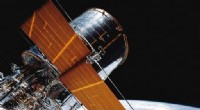
* Spacecraft: Space missions like Gaia and Hipparcos have provided highly accurate measurements of the positions and motions of millions of stars, creating a precise 3D map of our Milky Way galaxy.
Determining Exact Positions:
1. Observation: Astronomers use telescopes and other instruments to observe celestial objects.
2. Calibration: They calibrate their instruments using known reference stars and other objects with precisely measured positions.
3. Measurement: They carefully measure the position of the target object using the calibrated instruments.
4. Conversion: The measurements are converted into specific coordinate systems, like RA and Dec.
5. Verification: The results are cross-checked with other observations and data to ensure accuracy.
Example:
To determine the exact position of a star, astronomers would:
* Observe the star using a telescope equipped with a CCD camera.
* Calibrate the instrument using known reference stars.
* Measure the position of the star relative to the reference stars.
* Convert the measurements into RA and Dec coordinates.
* Verify the results using other data and observations.
By combining these coordinate systems and measurement techniques, astronomers are able to pinpoint the precise positions of celestial objects with remarkable accuracy.