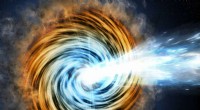
Cosmology is a branch of astronomy that studies the origin, evolution, structure, and ultimate fate of the universe. It seeks to understand the fundamental laws that govern the cosmos and use them to explain phenomena like the Big Bang, the formation of galaxies, and the distribution of matter and energy in space.
Here are some of the key areas of research in cosmology:
* The Big Bang Theory: This theory describes the origin and evolution of the universe from a very hot and dense state.
* Cosmic Microwave Background Radiation: This faint radiation is a remnant of the Big Bang and provides evidence for the theory.
* Dark Matter and Dark Energy: These mysterious substances make up the vast majority of the universe's mass and energy but are not directly observable.
* Galaxy Formation and Evolution: Cosmologists study how galaxies formed and how they have changed over time.
* Structure Formation: They investigate the large-scale structure of the universe, including the distribution of galaxies and clusters.
Cosmology relies on various scientific disciplines, including:
* Astronomy: Observing and studying celestial objects.
* Physics: Understanding the fundamental laws of nature.
* Mathematics: Modeling and analyzing cosmological data.
So, if you are interested in learning about the universe and its mysteries, cosmology is the science for you.