1. Solar Wind and Charged Particles:
* The Sun constantly emits a stream of charged particles called the solar wind.
* These particles carry energy and are highly affected by magnetic fields.
2. Earth's Magnetic Field:
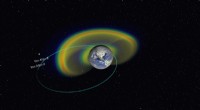
* Earth acts like a giant magnet with its own magnetic field.
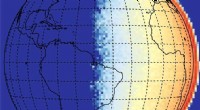
* This field acts as a shield, deflecting most of the solar wind away from our planet.
3. Interaction at the Poles:
* However, some charged particles from the solar wind can get trapped in Earth's magnetic field lines.
* These charged particles spiral along the magnetic field lines and are funneled towards the poles (both north and south).
4. Collision and Excitation:
* As the charged particles from the solar wind reach Earth's upper atmosphere, they collide with atoms of oxygen and nitrogen.
* These collisions excite the atoms, causing them to gain energy.
5. Emission of Light:
* Once the excited atoms release their energy, they emit light in different colors:
* Oxygen atoms typically emit green or red light.
* Nitrogen atoms usually emit blue or purple light.
* The combination of these colors creates the spectacular aurora display.
In short, the Aurora Borealis is a result of charged particles from the Sun interacting with Earth's magnetic field and exciting atoms in the upper atmosphere, causing them to emit light.
Factors Affecting Aurora Intensity:
* Solar Activity: The intensity of the auroral display is directly linked to the strength of the solar wind. More intense solar storms produce more energetic particles, leading to brighter and more active auroras.
* Geomagnetic Activity: The intensity of Earth's magnetic field also influences auroral activity. Strong geomagnetic storms can push the auroral oval closer to the equator, making the Northern Lights visible in more southern regions.
The Northern Lights are a beautiful example of the interplay between space weather and Earth's magnetic field.