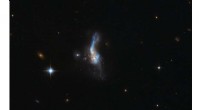
1. Dust and Gas Cloud: It all starts with a vast cloud of dust and gas in space, mostly hydrogen and helium, with a small amount of heavier elements. This cloud can be incredibly large, spanning light-years.
2. Gravitational Collapse: Over time, slight variations in density within the cloud cause regions of higher density to attract more material through gravity. This creates a feedback loop: more mass means stronger gravity, which attracts more mass, and so on. This process causes the cloud to begin collapsing.
3. Accretion Disk: As the cloud collapses, it starts to spin faster due to the conservation of angular momentum. This spinning motion creates a flat, rotating disk of material, called an accretion disk.
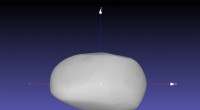
4. Planetesimals: Within this disk, tiny dust particles collide and stick together due to electrostatic forces. As these particles grow larger, they exert stronger gravitational pulls, attracting more particles and growing even bigger. These larger bodies are called planetesimals, and can reach sizes of a few kilometers.
5. Planetary Formation: Over millions or even billions of years, planetesimals continue to collide and merge, forming increasingly larger bodies. Eventually, these collisions become more violent and destructive, leading to the formation of a few dominant planets within the disk.
6. Clearing the Neighborhood: Once a planet has reached a significant size, its gravity becomes strong enough to clear its orbital path of remaining planetesimals. This is how a planet establishes its dominance within a particular region of the solar system.
7. Further Evolution: After a planet forms, its internal structure and atmosphere can continue to evolve. Internal heat from radioactive decay and tidal forces can melt and differentiate the planet's core, creating a layered structure. Volcanoes, tectonic activity, and atmospheric changes can further shape the planet over billions of years.
In Summary: Gravity plays a crucial role in planet formation by:
* Pulling material together to form a dense cloud.
* Creating a spinning accretion disk.
* Causing collisions that build planetesimals.
* Merging planetesimals into planets.
* Clearing orbital paths to form distinct planets.
This process is a complex and ongoing one, with much still being discovered about the details of planet formation.