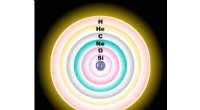
* White dwarfs are the end product of most stars. Stars like our Sun will eventually become white dwarfs. They are the remnants of the core of a star after it has shed its outer layers.
* White dwarfs are incredibly dense and stable. They are supported by electron degeneracy pressure, a quantum effect that prevents further collapse.
* White dwarfs cool over very long timescales. They don't evolve into anything else, but gradually fade away into cold, dark objects called black dwarfs. This process takes trillions of years, much longer than the current age of the universe.
However, there are a few exceptions:
* White dwarf mergers: Two white dwarfs orbiting each other can eventually merge. This can lead to a supernova explosion, or even the formation of a neutron star.
* White dwarf accretion: If a white dwarf is in a binary system with another star, it can accrete material from its companion. This can lead to a supernova explosion or the formation of a Type Ia supernova.
So, while a white dwarf itself doesn't "evolve" further, its fate can be influenced by interactions with other stars or objects.