1. Fuel Exhaustion:
* The star's core runs out of hydrogen, the fuel that powers its nuclear fusion.
* The core begins to contract under its own gravity.
2. Iron Core Formation:
* As the core contracts, heavier elements are formed through nuclear fusion.
* Eventually, the core is composed primarily of iron, which cannot be fused further to release energy.
3. Core Collapse:
* The iron core can no longer support the star's immense weight and collapses catastrophically.
* This collapse occurs at incredibly high speeds, almost reaching the speed of light.
4. Supernova Explosion:
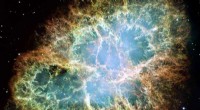
* The collapse of the core releases an enormous amount of energy, causing the star to explode in a supernova.
* This explosion blasts the outer layers of the star into space at speeds of thousands of kilometers per second.
5. Remnant Formation:
* The core, now extremely dense, can become either a neutron star or a black hole, depending on its initial mass.
* Neutron star: A highly dense object where protons and electrons have merged into neutrons.
* Black hole: An object with such strong gravity that nothing, not even light, can escape its pull.
The Supernova's Impact:
* Supernovae are incredibly bright events, outshining entire galaxies for a short period.
* They release heavy elements into the interstellar medium, enriching it and allowing for the formation of new stars and planets.
* They can also trigger star formation in nearby gas clouds.
In Summary:
The cooling and collapse of a massive star is a violent and spectacular process that results in a supernova explosion. This explosion leaves behind a dense remnant, either a neutron star or a black hole, and enriches the universe with heavy elements.