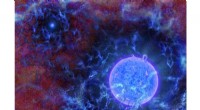
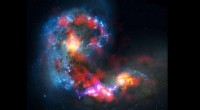
1. Giant Molecular Cloud: The solar system began as a giant cloud of gas and dust, called a nebula, composed primarily of hydrogen and helium, with trace amounts of heavier elements.
2. Collapse: This cloud was not uniform and had small variations in density. Gravity caused the denser regions to collapse in on themselves, pulling in surrounding material. As the cloud collapsed, it spun faster and faster, like a figure skater pulling their arms in.
3. Accretion Disk: This rapid rotation flattened the cloud into a disk, known as an accretion disk, with a central protostar at its core.
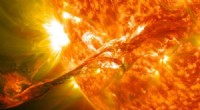
4. Protostar Formation: The central protostar continued to accrete matter and heat up, eventually reaching temperatures and pressures high enough to trigger nuclear fusion. This marked the birth of the Sun.
5. Planetesimal Formation: Within the disk, tiny dust particles collided and clumped together, forming larger bodies called planetesimals. These planetesimals continued to grow by further collisions and accretion.
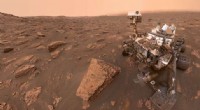
6. Planet Formation: Over millions of years, planetesimals accreted into larger bodies, eventually forming the planets of the solar system. The inner planets (Mercury, Venus, Earth, Mars) formed from mostly rocky materials, while the outer planets (Jupiter, Saturn, Uranus, Neptune) formed from ices and gases.
7. Residuals: Some of the leftover material from the original nebula became asteroids, comets, and other small bodies.
Key Points:
* The nebular hypothesis is supported by observations of other star-forming regions in the galaxy.
* It explains the distribution of mass and angular momentum within the solar system.
* It accounts for the presence of different types of planets in the inner and outer solar system.
Evidence:
* Composition of planets: The composition of the planets aligns with the expected distribution of elements in the original nebula.
* Angular momentum: The planets all orbit in the same plane and in the same direction, indicating a common origin.
* Asteroids and comets: The presence of these small bodies suggests leftover material from the original nebula.
Limitations:
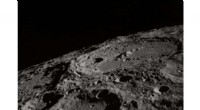
* It doesn't fully explain the formation of the planets' moons, particularly the large moons of Jupiter and Saturn.
* It is still being refined and developed as scientists learn more about planet formation.
Despite some limitations, the nebular hypothesis remains the most comprehensive and accepted model for the formation of the solar system.