* Rotation: All planets in our solar system rotate on their axes. This rotation causes day and night as different parts of the planet face the sun.
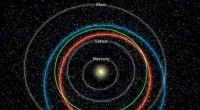
* Orbit: Planets also orbit the sun. This means that the sun's position in the sky changes over time, leading to seasons.
However, there are some interesting scenarios that might make you think of a planet where the sun doesn't rise or set:
* Polar Regions: In the polar regions of Earth (and other planets), the sun can stay above the horizon for extended periods during summer and stay below the horizon for extended periods during winter. This phenomenon is known as the "midnight sun" and the "polar night."
* Tidal Locking: Some moons, like our own Moon, are tidally locked to their planet. This means the same side of the moon always faces the planet. On such a moon, one side would always face the sun and experience perpetual daylight, while the other side would always be in darkness.
Let me know if you'd like to explore more about tidal locking or the polar regions!