* Luminosity: This is the total amount of energy a star emits per second. It depends on both the star's surface temperature and its surface area.
* Surface Temperature: This is the temperature of the star's outer layers, which determines the color and peak wavelength of the light it emits.
* Radius: The larger a star's radius, the greater its surface area.
The relationship:
* A high luminosity means the star is emitting a lot of energy.
* A low surface temperature means the star is relatively cool, and its energy output per unit area is low.
To compensate for the lower energy output per unit area and still achieve high luminosity, the star needs a very large surface area, which translates to a large radius.
Examples:
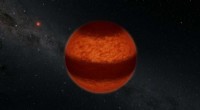
Red giant stars are a prime example. They have relatively cool surface temperatures (around 3000-4000 K) but are much larger than our Sun, giving them a high luminosity.