Within our Solar System:
* Planets: All the planets in our solar system have been directly observed, both with telescopes and through spacecraft missions. We have detailed images of their surfaces, atmospheres, and even their moons.
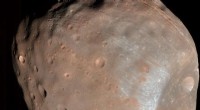
* Moons: We've explored numerous moons in our solar system, including the famous moons of Jupiter and Saturn. Some have unique geological features, atmospheres, and even potential for harboring life.
* Asteroids and Comets: These celestial bodies have been studied extensively. We've tracked their orbits, analyzed their compositions, and even witnessed cometary outbursts and asteroid impacts.
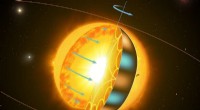
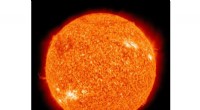
* The Sun: We have a constant stream of data from the Sun, observing its flares, sunspots, and the solar wind.
Beyond our Solar System:
* Stars: Millions of stars have been observed, categorized by their size, temperature, and age. We can even measure their light to understand their chemical composition.
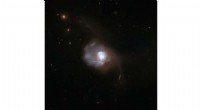
* Galaxies: We've seen countless galaxies, from spiral galaxies like our Milky Way to elliptical and irregular galaxies. Some are billions of light-years away.
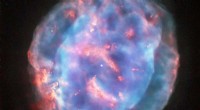
* Nebulae: These clouds of gas and dust are the birthplaces of stars, and we've captured stunning images of their swirling colors and intricate shapes.
* Black Holes: While we can't directly see black holes themselves (because they don't emit light), we can observe their powerful effects on surrounding matter. We've detected the gravitational lensing they create and the X-rays emitted by material falling into them.
* Supernovae: We've observed the explosive death of stars as they reach the end of their life cycle, witnessing the release of vast amounts of energy and the formation of new elements.
* Gravitational Waves: Astronomers have detected ripples in spacetime caused by the collision of massive objects like black holes and neutron stars. These waves provide a completely new way to understand the universe.
* Exoplanets: Thousands of planets orbiting other stars have been detected. Some of these are potentially habitable, sparking excitement about the possibility of finding life beyond Earth.
Methods of Observation:
* Telescopes: Ground-based and space-based telescopes gather light from distant objects, allowing us to see them in visible light, infrared, ultraviolet, and other wavelengths.
* Spectroscopy: Analyzing the light from celestial objects tells us about their composition, temperature, and motion.
* Radio Astronomy: Using radio telescopes, we can detect radio waves emitted by objects in space, giving us information about their magnetic fields and other phenomena.
* Spacecraft: By sending spacecraft to planets and moons, we can get up close and personal with these objects, taking images and collecting data about their composition and geology.
This is just a glimpse of what astronomers have seen. The field of astronomy is constantly evolving, and with each new generation of telescopes and instruments, our understanding of the universe continues to expand.