1. Rocket Propulsion:
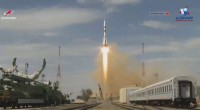
* Newton's Third Law: The fundamental principle behind rocket propulsion is Newton's Third Law of Motion: "For every action, there is an equal and opposite reaction." Rockets expel hot, high-pressure gas (propellant) downwards, creating an upward force that propels the rocket upwards.
* Types of Rocket Engines: Different types of rocket engines are used depending on the mission. The most common type is the liquid-propellant rocket engine, which burns liquid fuels like kerosene and liquid oxygen. Solid-propellant rockets are simpler but less controllable.
* Multi-Stage Rockets: Most spacecraft use multi-stage rockets. Each stage is a separate rocket with its own engine and fuel. As one stage runs out of fuel, it detaches, reducing the overall weight and allowing the next stage to accelerate the spacecraft further.
2. Gravity and Escape Velocity:
* Earth's Gravity: Earth's gravity pulls everything towards its center, making it challenging to escape.
* Escape Velocity: To escape Earth's gravity, a spacecraft needs to reach a specific speed called escape velocity, which is approximately 11.2 kilometers per second (7 miles per second). At this speed, the spacecraft's kinetic energy (energy of motion) overcomes Earth's gravitational pull.
3. Aerodynamics and Trajectory:
* Aerodynamic Design: The shape of the spacecraft and the rockets carrying it is carefully designed to minimize air resistance (drag) during the launch phase. This allows for efficient acceleration.
* Launch Trajectory: The spacecraft follows a specific trajectory, usually a curved path that maximizes efficiency and avoids obstacles like buildings and mountains. This trajectory also helps the spacecraft reach the desired orbit.
4. Guidance and Control Systems:
* Computers and Sensors: Advanced computers and sensors continuously monitor the spacecraft's position, speed, and attitude (orientation) during launch.
* Control Systems: Control systems use actuators (like thrusters) to adjust the rocket's thrust and direction to maintain the desired trajectory and ensure a safe and successful launch.
5. Spacecraft Separation:
* Payload Fairing: The spacecraft itself is typically enclosed within a protective "payload fairing" during launch. This fairing reduces drag and protects the spacecraft from the intense heat and pressure during atmospheric ascent.
* Separation: Once the rocket has reached a high enough altitude, the payload fairing separates from the spacecraft, allowing it to continue its journey to its destination.
In summary, spacecraft launch into space using powerful rockets that overcome Earth's gravity and propel them to the desired orbit. The process involves sophisticated engineering, precise calculations, and a deep understanding of physics.