Telescopes:
* Optical Telescopes: These are the most common type, gathering visible light from celestial objects. They come in various sizes and designs, including:
* Refracting Telescopes: Use lenses to focus light.
* Reflecting Telescopes: Use mirrors to focus light.
* Radio Telescopes: Collect radio waves emitted by celestial objects.
* Space Telescopes: Orbit above Earth's atmosphere, providing clear views of the universe. Examples include Hubble Space Telescope, James Webb Space Telescope, and Kepler Space Telescope.
Instruments:
* Spectrographs: Split light into its component wavelengths, revealing information about an object's composition, temperature, and motion.
* Cameras: Capture images of celestial objects, often using specialized detectors like CCDs (Charge-Coupled Devices).
* Photometers: Measure the brightness of celestial objects.
* Interferometers: Combine the signals from multiple telescopes to achieve higher resolution and sensitivity.
Data Analysis:
* Computers: Powerful computers are used for data processing, analysis, and simulations.
* Software: Specialized software packages are used to analyze astronomical data, create models, and visualize results.
* Algorithms: Complex algorithms are used to extract meaningful information from the vast amounts of data collected by telescopes and instruments.
Other Tools:
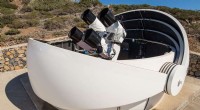
* Observatories: These are dedicated facilities housing telescopes and instruments.
* Labs: Astronomers often use labs to conduct experiments related to their research, such as studying meteorites or simulating conditions in space.
* Collaboration: Astronomers often work in teams, collaborating with researchers from various disciplines, including physicists, mathematicians, and engineers.
Emerging Technologies:
* Adaptive Optics: Technology that compensates for atmospheric distortions, providing sharper images.
* Gravitational Wave Detectors: Detect ripples in spacetime caused by massive events like black hole mergers.
* Neutrino Telescopes: Study neutrinos, elusive particles that can travel through matter unimpeded, providing insights into the inner workings of stars and other celestial objects.
The tools astronomers use are constantly evolving as technology advances, enabling them to delve deeper into the mysteries of the universe.