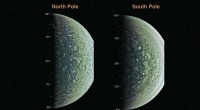
1. Planets: These are celestial bodies that orbit stars. They are large enough to have their own gravity, which pulls them into a nearly round shape. Examples: Earth, Jupiter, Mars.
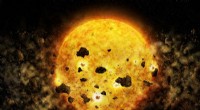
2. Stars: These are giant balls of hot gas that produce light and heat through nuclear fusion. They are much larger than planets, but vary greatly in size. Examples: Sun, Sirius, Betelgeuse.
3. White Dwarfs: These are the remnants of stars like our Sun. They are about the size of the Earth, but much denser.
4. Neutron Stars: These are incredibly dense objects that form after a supernova explosion. They are only about 20 kilometers across, but pack the mass of our Sun into that space.
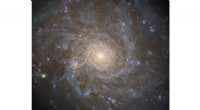
5. Galaxies: These are massive collections of stars, gas, dust, and dark matter held together by gravity. They can contain hundreds of billions of stars. Examples: Milky Way, Andromeda Galaxy.
6. Galaxy Clusters: These are massive groups of galaxies bound together by gravity. They can contain hundreds or even thousands of galaxies.
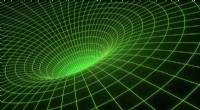
It's important to note that there are many other types of astronomical objects, such as black holes, quasars, nebulae, and asteroids. This list simply provides a general overview of some of the most common and well-known objects in the universe.