1. Remote Sensing:
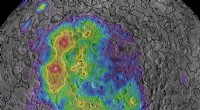
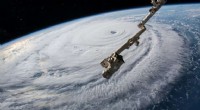
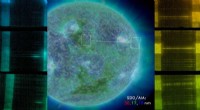
* Spectroscopy: Analyzing the light reflected from a moon's surface can reveal the chemical composition of the materials present. Different minerals and elements absorb and reflect light at specific wavelengths.
* Imaging: High-resolution images from spacecraft like the Lunar Reconnaissance Orbiter (LRO) and the Cassini mission to Saturn provide detailed views of the surface, revealing features like craters, mountains, and plains. These features give clues about the composition and geological history of the moon.
* Radar: Sending radar signals to a moon and analyzing the reflected signals can reveal the surface's texture and the presence of subsurface materials.
2. In-situ Analysis:
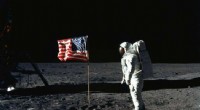
* Sample Return Missions: Bringing back samples of the moon's surface allows for detailed laboratory analysis. This was done by the Apollo missions to the Moon and by the Hayabusa missions to asteroids.
* Landers and Rovers: Missions like the Viking landers on Mars and the Yutu rover on the Moon have deployed instruments to analyze the composition of the surface directly.
3. Meteorite Analysis:
* Lunar Meteorites: Studying meteorites that have originated from the Moon can provide insights into its composition and formation.
4. Theoretical Modeling:
* Computer Simulations: Scientists use computer models to understand the processes that have shaped the surfaces of moons, helping to interpret the data gathered from other methods.
Specific Examples:
* The Moon: We know that the Moon's surface is primarily composed of rocks like anorthosite (a light-colored rock rich in calcium and aluminum) and basalt (a dark-colored rock rich in iron and magnesium). These were discovered through remote sensing, sample return missions (Apollo), and meteorite analysis.
* Europa (Jupiter's moon): Scientists suspect Europa's surface is primarily made of water ice, with evidence suggesting a possible subsurface ocean. This information comes from remote sensing, particularly from the Galileo mission, and theoretical models.
Ongoing Research:
Scientists continue to explore the surfaces of moons using the latest technology, including more sophisticated spectrometers, high-resolution cameras, and even landing probes. These efforts aim to answer questions about the origin, evolution, and potential habitability of these celestial bodies.