1. Gamma-ray Spectroscopy:
* Emission Lines: Planets, especially those with radioactive elements in their cores or crust, emit gamma rays. By analyzing the specific wavelengths of these gamma rays, scientists can identify the radioactive elements present. This helps them understand the planet's composition and geological history.
* Absorption Lines: Gamma rays emitted from the Sun or other cosmic sources can be absorbed by elements in a planet's atmosphere. By analyzing the absorbed wavelengths, scientists can identify the elements present in the atmosphere. This method is particularly useful for studying the composition of atmospheres of planets outside our solar system (exoplanets).
2. Gamma-Ray Burst Observation:
* Cosmic Explosions: Gamma-ray bursts are powerful explosions in the universe, often associated with the formation of black holes or supernovae. Gamma rays from these bursts can pass through planets, revealing clues about their composition. Analyzing the energy spectrum of the gamma rays that pass through the planet can tell us about the density and composition of its interior.
3. Gamma-Ray Imaging:
* Spatial Mapping: Gamma-ray detectors can be used to create images of planets, revealing the distribution of different elements across their surfaces. This helps scientists understand the geology and composition of the planet's surface.
Limitations:
* Detection Difficulty: Gamma rays are very energetic and can be difficult to detect, requiring specialized telescopes and detectors.
* Limited Information: While gamma rays provide valuable information about composition, they don't tell the whole story. Other observational techniques, like visible light and infrared spectroscopy, are needed to get a more complete picture of a planet's composition.
Examples:
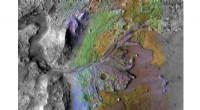
* Mars: Scientists have used gamma-ray spectroscopy to map the distribution of elements like iron, potassium, and chlorine on Mars' surface. This has helped them understand the composition of the Martian crust and the history of water on the planet.
* Exoplanets: Gamma rays from distant stars can be used to study the atmospheres of exoplanets. This method has revealed the presence of elements like carbon and oxygen in the atmospheres of some exoplanets.
In conclusion, gamma rays are a powerful tool for exploring the composition of planets. They allow scientists to study the presence of elements in both the interior and atmosphere of planets, providing valuable insights into their formation, history, and potential for life.