Early Observations:
* Ancient Astronomers: Early civilizations observed the night sky and noticed stars seemed to change brightness over time (like Betelgeuse) and that some disappeared or appeared. This laid the foundation for the concept of stellar evolution.
* William Herschel (1700s): This astronomer observed star clusters and noticed a correlation between their color and their age. This hinted at a potential connection between color and the stage of a star's life.
Key Discoveries:
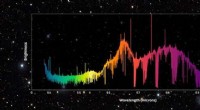
* Spectroscopy (1800s): This technology allowed astronomers to analyze the light from stars and determine their chemical composition. It also revealed their temperature and motion, paving the way for understanding their evolution.
* The Hertzsprung-Russell Diagram (early 1900s): This diagram, plotting the luminosity of stars against their temperature, showed a clear pattern. Stars clustered along a diagonal line, with hotter, bluer stars being brighter. This hinted at an evolutionary pathway for stars.
* Nuclear Fusion (1900s): Understanding nuclear physics led to the realization that stars generate their energy by fusing hydrogen into helium in their cores. This provided the mechanism for stellar evolution.
Modern Understanding:
* Computer Simulations: Modern computers allow scientists to model the evolution of stars, taking into account factors like gravity, nuclear reactions, and energy transfer. These models refine our understanding of stellar lifecycles.
* Observation of Stellar Nebulae: Telescopes like the Hubble Space Telescope have provided stunning images of star-forming regions (nebulae), showing how stars are born.
* Supernova Observations: Astronomers observe supernova explosions, the deaths of massive stars, providing crucial information about the final stages of stellar evolution.
In Summary:
The discovery of the star life cycle was a collaborative effort across centuries, involving observations, theories, and technological advancements. We continue to refine our understanding of stellar evolution through ongoing research and observations.